Launch offer — valid today only

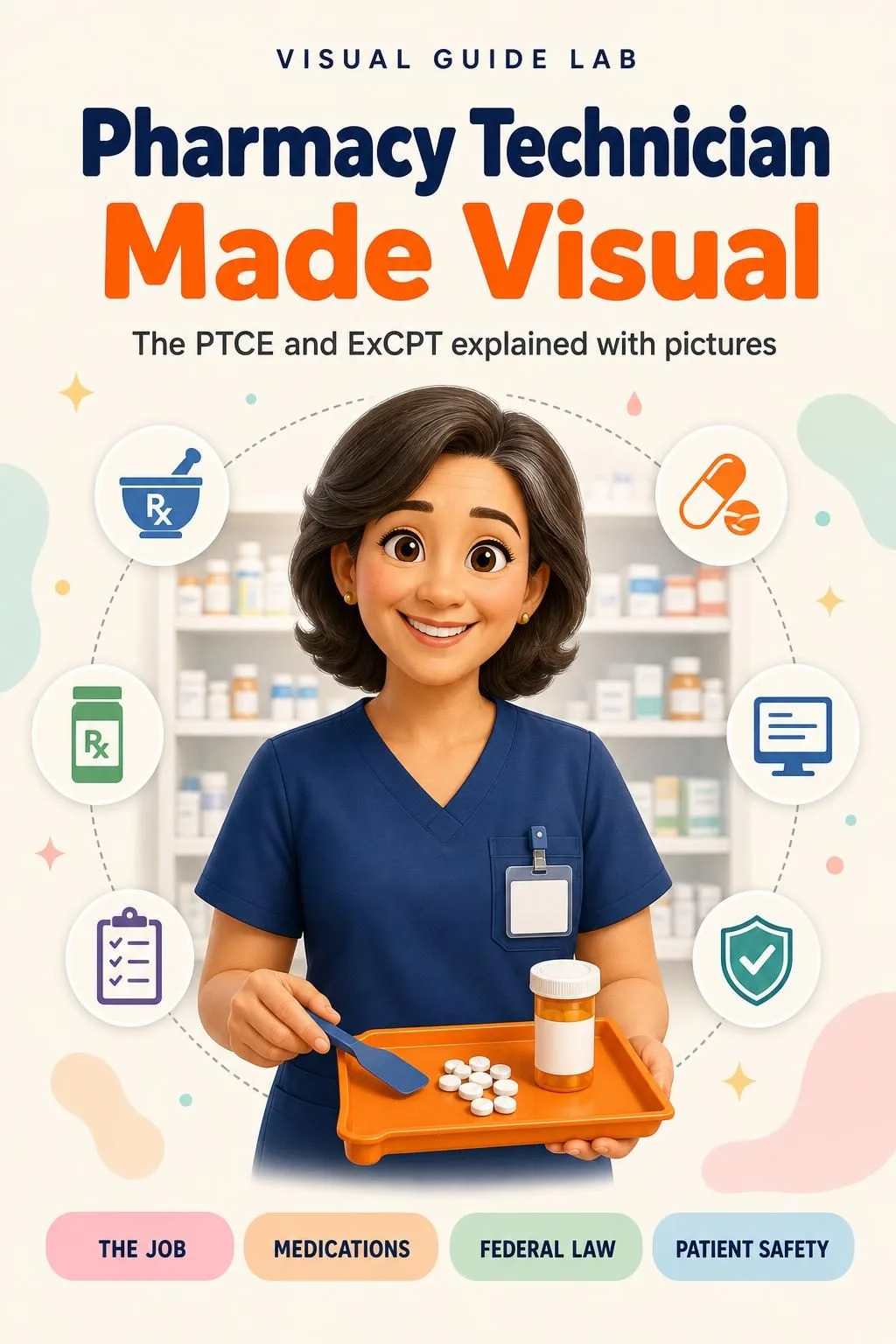
Prepare for the PTCE or the ExCPT, One Topic per Page With Every Topic Drawn Step by Step!

Top drugs and their stems, DEA schedules, federal law, look-alike names, NDCs, DAW codes, garbing and pharmacy math: in your notes it's a wall of text. Here every topic fits on one page, with the drawing and what you need to remember. 77 illustrated pages.

I WANT TO STUDY VISUALLY

🔒 Secure checkout · PDF by email · 30-day guarantee

One topic per pagethe drawing shows you the rule and the text backs it up
77 illustrated pages7 parts, from the technician's job to pharmacy math, plus practice
Up-to-date sourcesPTCB's 2026 PTCE outline, DEA regulations and USP <797>/<800>

This Is What the Pages You Will Study Look Like

One topic per page, the drawing that shows you how it works and the boxes with what you need to know:

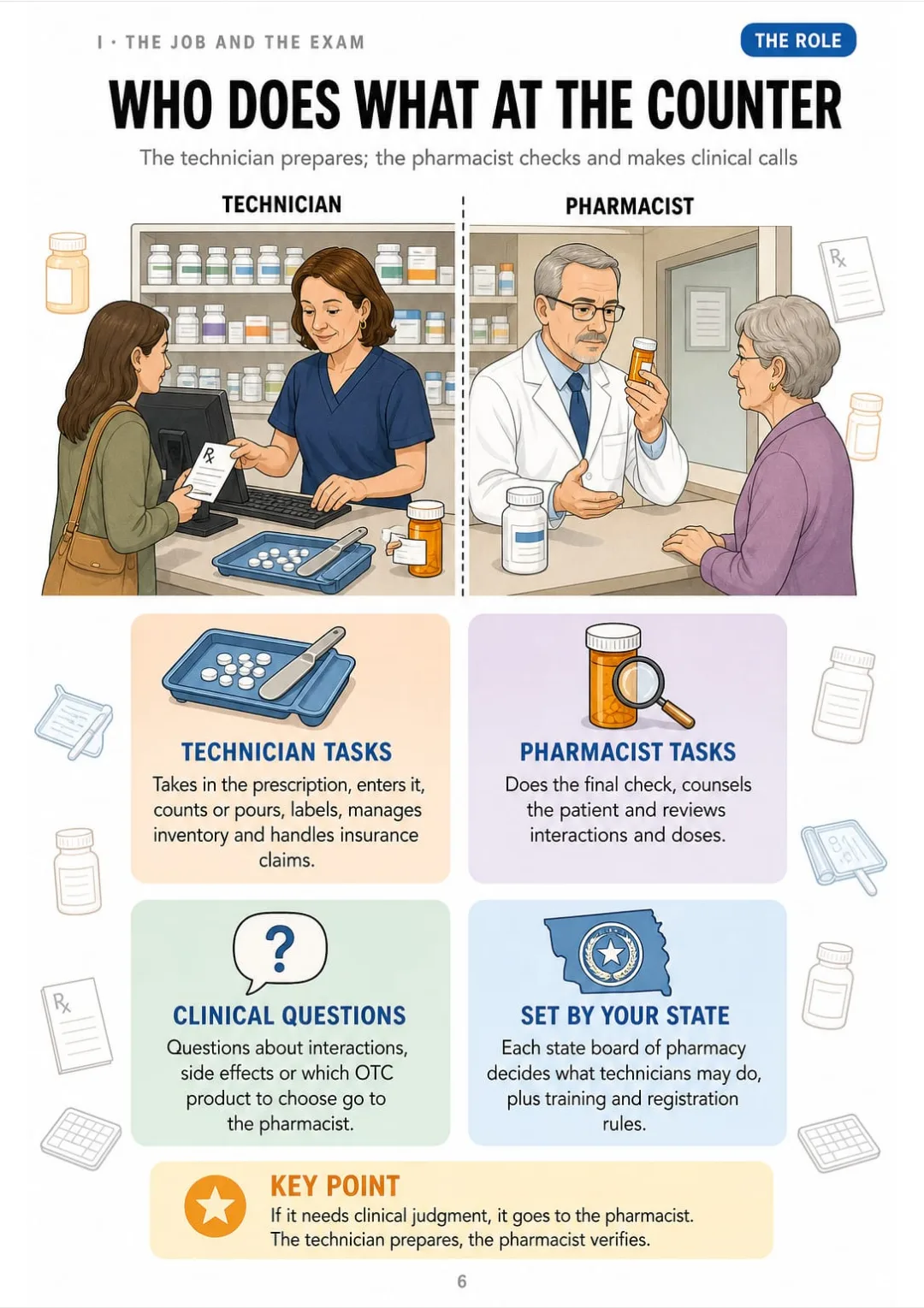
Technician: intake, entry, count, label, inventory, insurance · Pharmacist: final check, counseling, clinical calls
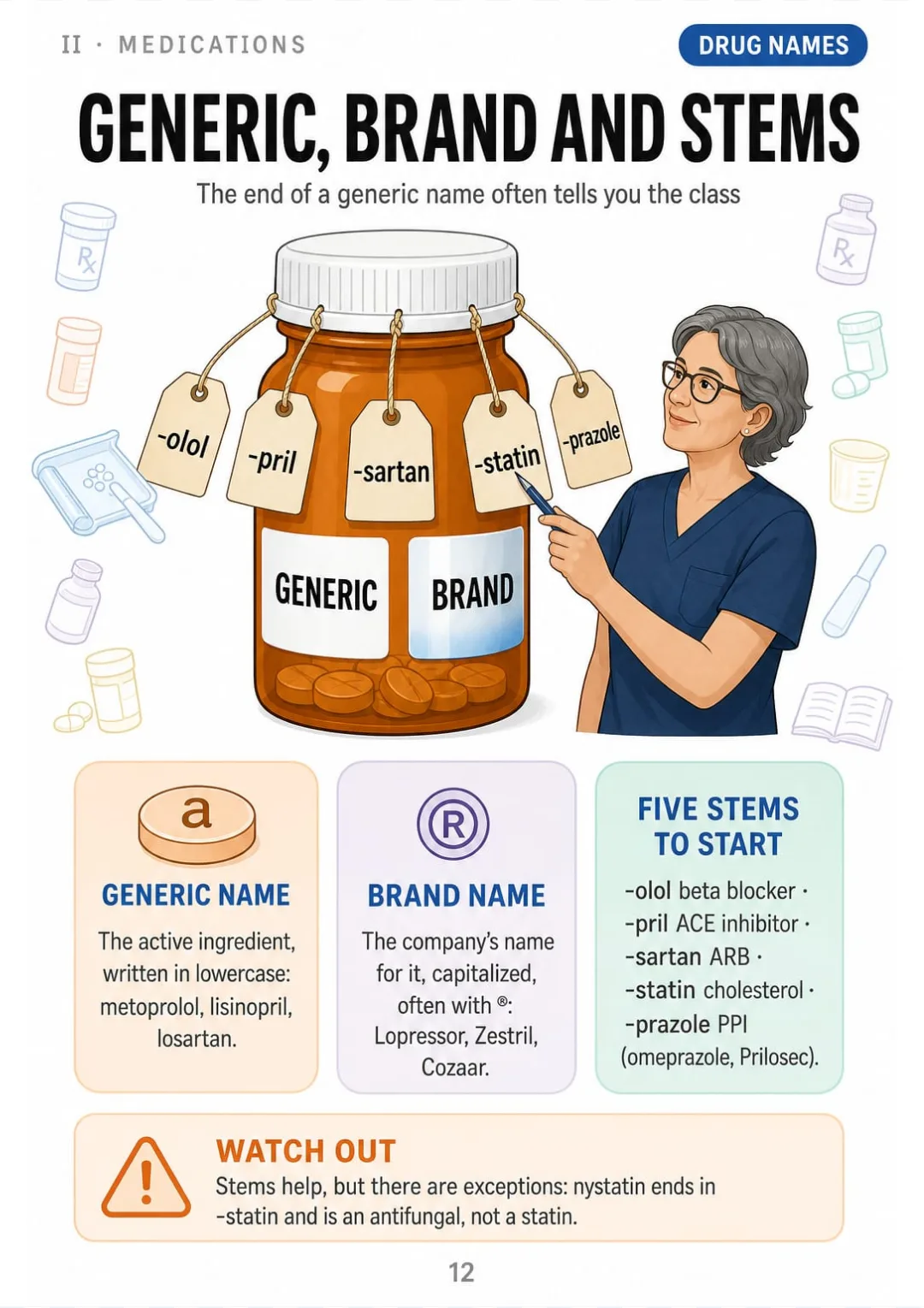
-olol, -pril, -sartan, -statin, -prazole: five stems, five drug classes
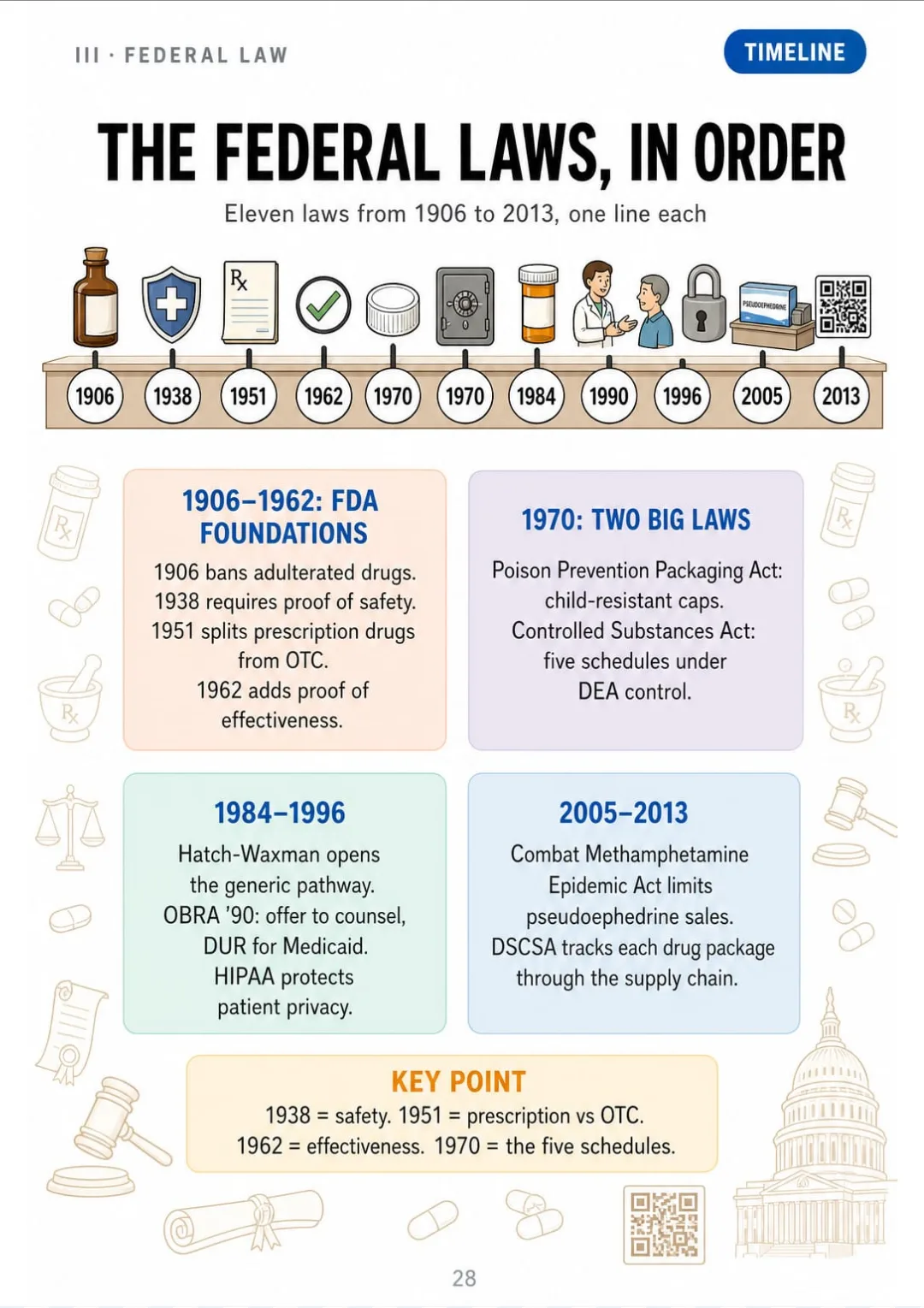
From 1906 to 2013: eleven federal laws, one line each, in the order they happened
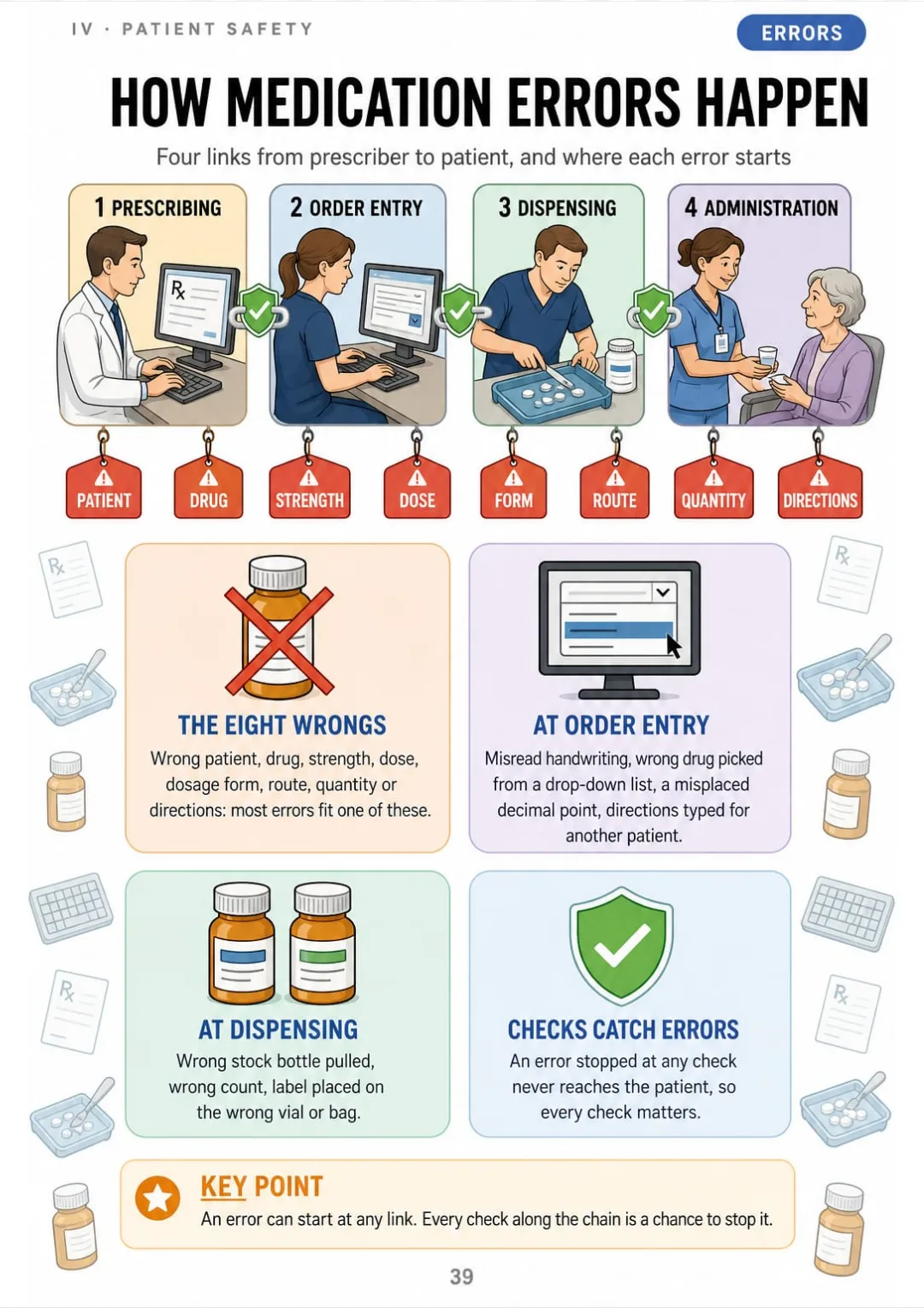
The prescription chain: prescribing, order entry, dispensing, administration, and the 8 error types
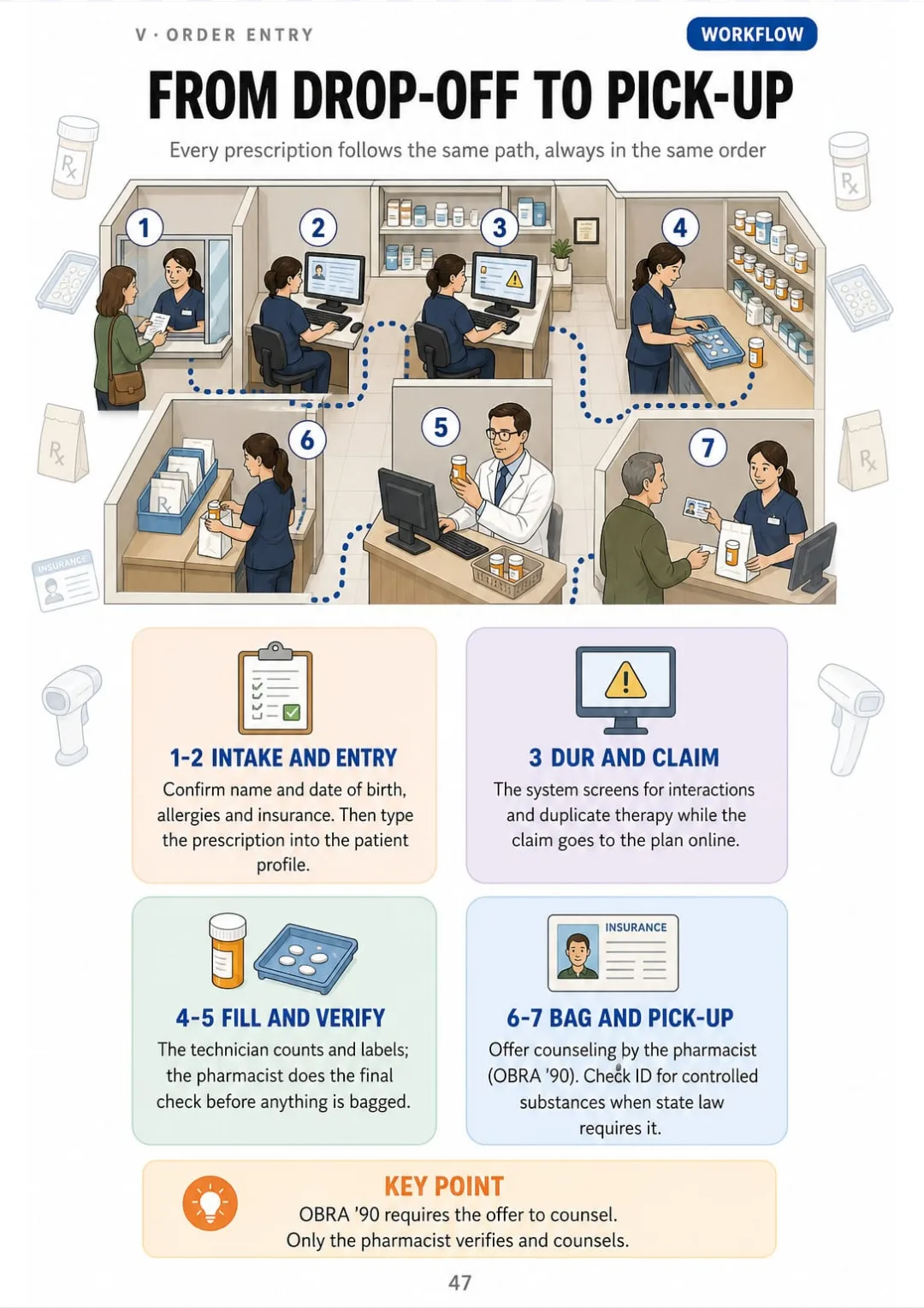
The workflow in 7 steps: intake, entry, DUR and claim, fill, verify, bag, pick-up.
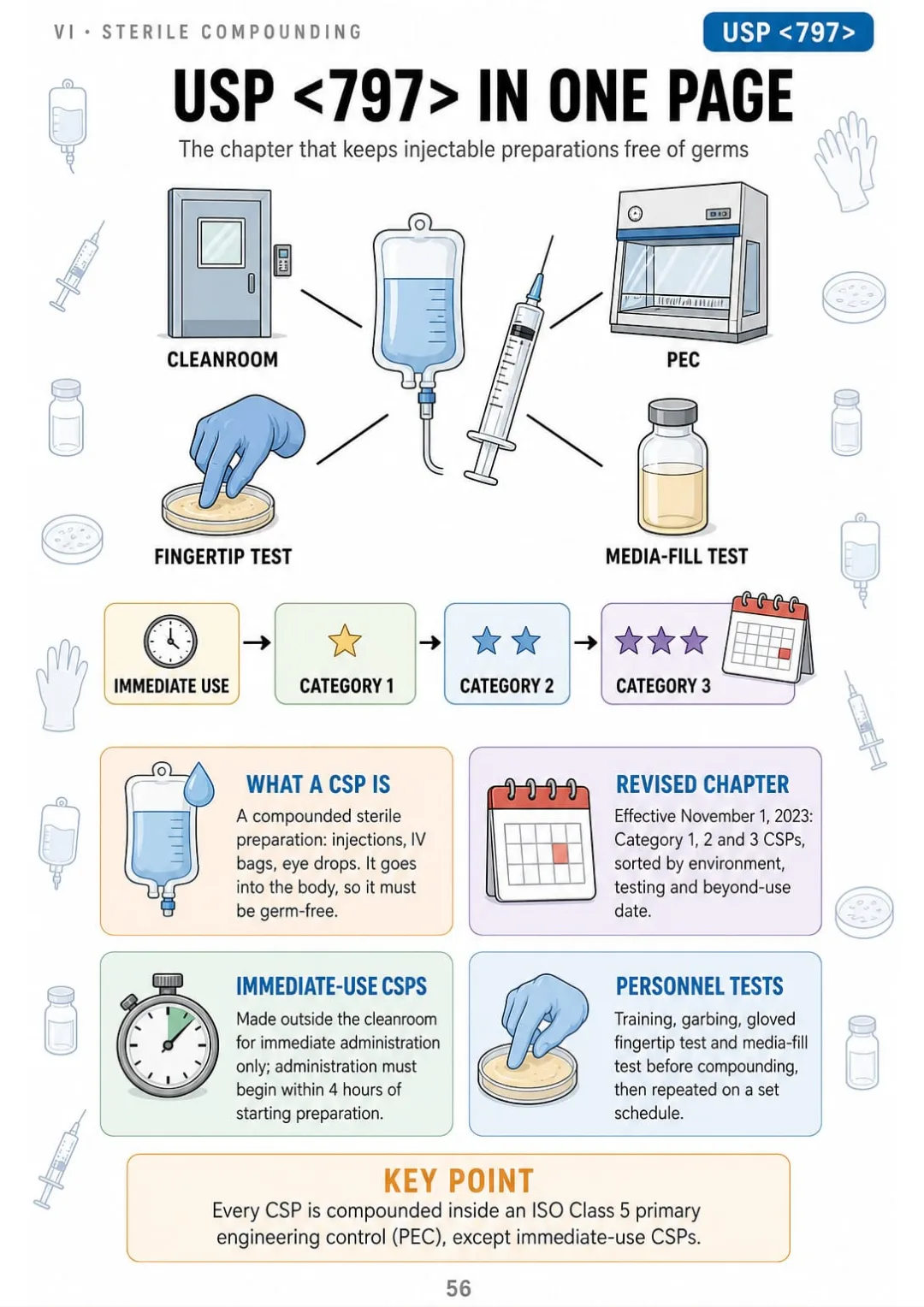
Immediate-use, Category 1, 2 and 3 CSPs on one page
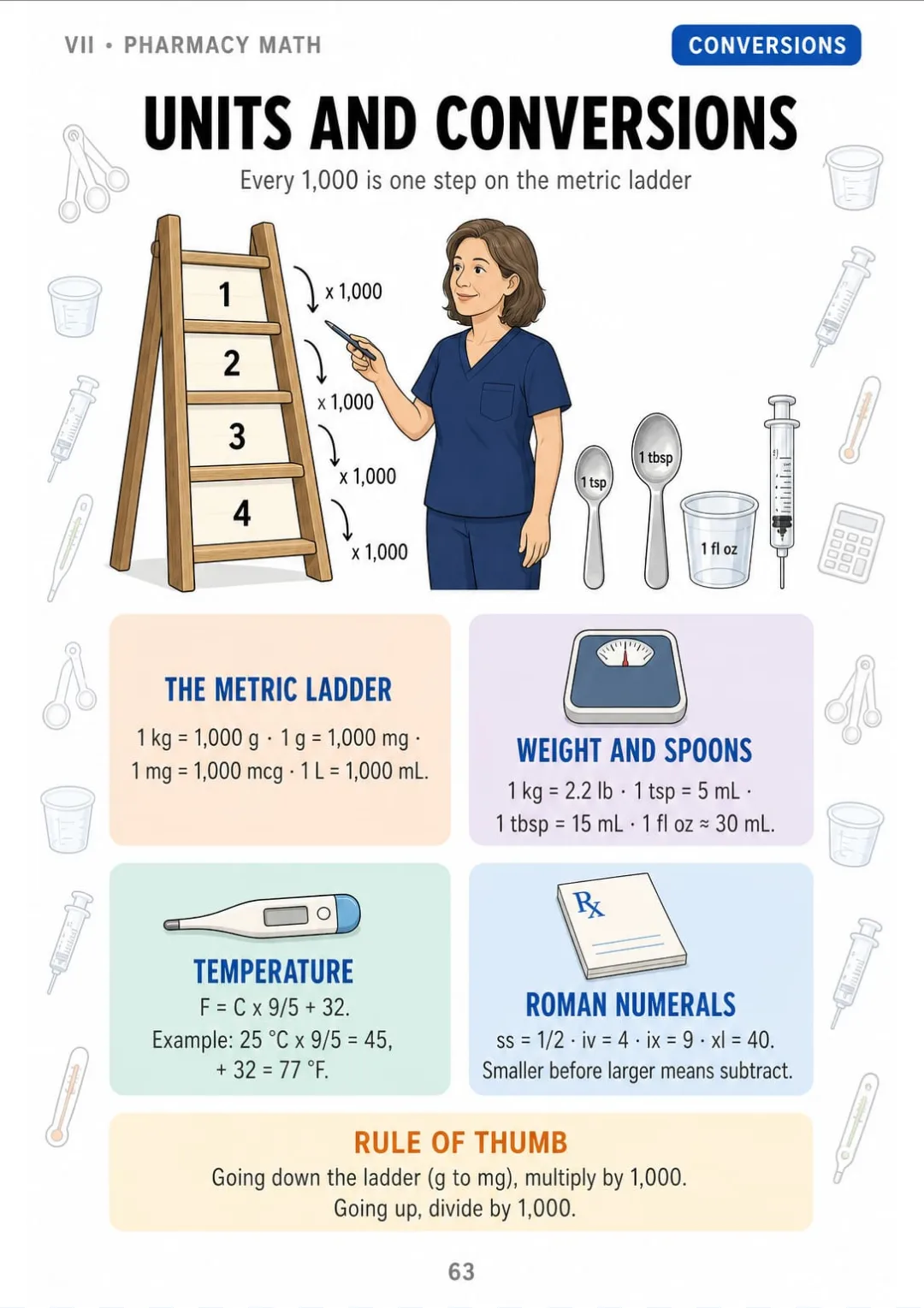
1 g = 1,000 mg · 1 kg = 2.2 lb · 1 tsp = 5 mL · 25 °C = 77 °F
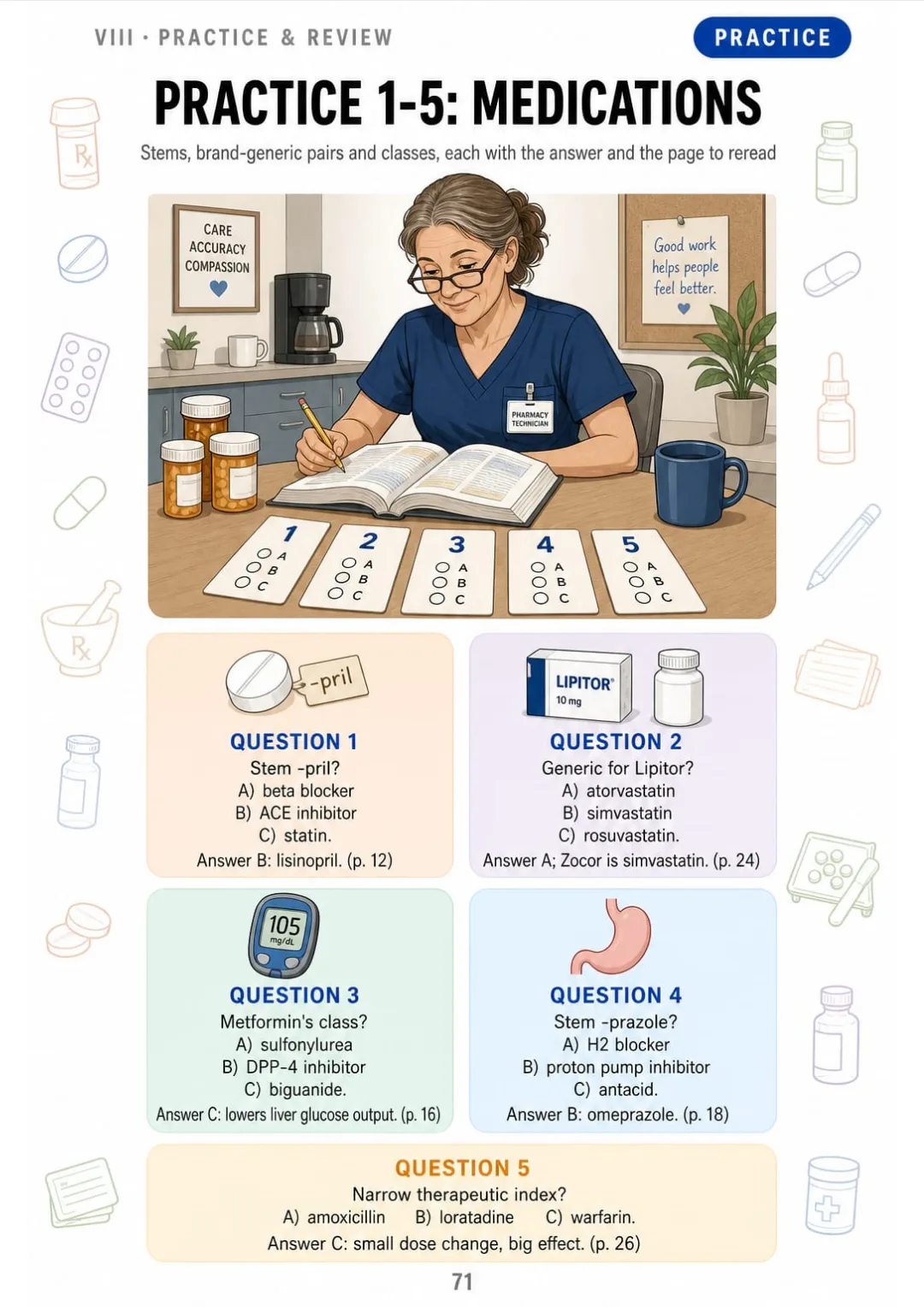
Questions 1-5: -pril, Lipitor, metformin, -prazole and warfarin, each with the answer explained.

Swipe to see more →

These are real pages from the book. The table of contents is the full one: 8 parts and 72 topics.

It's Not Your Memory. It's That Nobody Put It in Order for You.

You've read the list of federal pharmacy laws three times. You close your notes...

...and you can't remember which came first, Durham-Humphrey or Kefauver-Harris. It was just lines, one after another.

From 1906 to 2013: eleven federal laws, one line each, in the order they happened

Here the federal laws are a timeline drawn on one page, from 1906 to 2013: one law per line, in the order they happened.

And on the pages next to it, every part of the law has its own page: the controlled substance schedules, Schedule II prescriptions, DEA forms, REMS and HIPAA.

First you understand why each law came after the one before. Then the order sticks on its own.

SEE THE DIFFERENCE

Stop memorizing drug names you can't picture:

THIS
  • Page after page of dense text
  • Drug names without a single drawing
  • On the exam, you don't know where to start
Drug nomenclature comprises the chemical name, the nonproprietary (generic) name assigned by the United States Adopted Names Council, and the proprietary (brand) name registered by the manufacturer. USAN generic names frequently incorporate a stem denoting pharmacologic class: beta-adrenergic antagonists generally terminate in -olol, angiotensin-converting enzyme inhibitors in -pril, angiotensin II receptor blockers in -sartan, HMG-CoA reductase inhibitors in -statin, and proton pump inhibitors in -prazole. Exceptions exist, and stems do not convey therapeutic equivalence, strength, or indication, which must be verified against current references.
FOR THIS
  • Every drug class drawn
  • One topic per page, with the rules in boxes
  • You remember it because you've seen it
-olol, -pril, -sartan, -statin, -prazole: five stems, five drug classes
CONTENTS

Take a Look at the 8 Parts and 72 Topics

The job and the exam, medications, federal law, patient safety, order entry and processing, sterile compounding, pharmacy math, and practice with a final review: 77 pages, all illustrated

IThe Job and the Exam · pp. 6-11
  1. What a pharmacy technician does
  2. Where technicians work
  3. The PTCE and the ExCPT
  4. Anatomy of a prescription
  5. Sig codes and risky abbreviations
  6. Part I review
IIMedications · pp. 12-27
  1. Generic names, brand names and stems
  2. Dosage forms and routes
  3. Blood pressure and the heart
  4. Cholesterol and blood thinners
  5. Diabetes medications
  6. Asthma, COPD and allergies
  7. The stomach and the gut
  8. Pain, fever and inflammation
  9. Depression, anxiety and sleep
  10. Seizures, psychosis and ADHD
  11. Antibiotics and other anti-infectives
  12. Thyroid, steroids and hormones
  13. Top drugs: brand and generic (1)
  14. Top drugs: brand and generic (2)
  15. Narrow therapeutic index drugs
  16. Part II review
IIIFederal Law · pp. 28-38
  1. The federal laws, in order
  2. Controlled substance schedules
  3. Schedule II prescriptions
  4. Schedules III to V: refills and transfers
  5. DEA forms and records
  6. Checking a DEA number
  7. Pseudoephedrine and child-resistant caps
  8. The FDA: recalls and equivalence
  9. REMS and Medication Guides
  10. HIPAA and patient privacy
  11. Part III review
IVPatient Safety · pp. 39-46
  1. How medication errors happen
  2. Look-alike, sound-alike names
  3. High-alert medications
  4. Checks that stop errors
  5. When to call the pharmacist
  6. Reporting errors and reactions
  7. Hygiene and a clean workspace
  8. Part IV review
VOrder Entry and Processing · pp. 47-55
  1. From drop-off to pick-up
  2. Entering a prescription
  3. Reading an NDC and a stock bottle
  4. Filling and labeling
  5. Insurance claims and rejections
  6. DAW codes
  7. Inventory and storage
  8. Nonsterile compounding
  9. Part V review
VISterile Compounding · pp. 56-62
  1. USP <797> in one page
  2. The cleanroom suite
  3. Garbing, step by step
  4. Aseptic technique
  5. Beyond-use dates
  6. Hazardous drugs and USP <800>
  7. Part VI review
VIIPharmacy Math · pp. 63-70
  1. Units and conversions
  2. Ratio-proportion and dimensional analysis
  3. Doses by body weight
  4. Days' supply and quantity
  5. Percent and ratio strength
  6. Dilutions and alligation
  7. IV flow rates
  8. Part VII review
VIIIPractice and Final Review · pp. 71-77
  1. Practice: medications and law (questions 1-5)
  2. Practice: medications and law (questions 6-10)
  3. Practice: safety, order entry and math (questions 11-15)
  4. Practice: safety, order entry and math (questions 16-20)
  5. Answers explained
  6. Final review (1): numbers to know
  7. Final review (2): drug classes at a glance

What If Every Topic Fit on a Single Page?

Picture this:

Instead of rereading half a page on DAW codes without being able to picture them...

...you open the page and find codes 0 to 9 in one table, each with what it means and when it's used.

The workflow in 7 steps: intake, entry, DUR and claim, fill, verify, bag, pick-up.

And the top drugs, the DEA schedules, look-alike names, garbing and IV flow rates turn into drawings and tables you can read at a glance.

You stop memorizing and start understanding.

That's exactly what Pharmacy Technician Made Visual does. It's not “just another review book.” It's 7 parts and 58 illustrated topics, and at the end 20 practice questions with the answers explained and a two-page final review. Because what your brain sees in order, it remembers.

Because what your brain sees organized, it remembers.

Here Is What You Get with Pharmacy Technician Made Visual:

Ipp. 6-11

The Job and the Exam

What a pharmacy technician does and doesn't do, where techs work, the PTCE and the ExCPT, the parts of a prescription, and sig codes and risky abbreviations.

IIpp. 12-27

Medications

Generic names, brand names and stems, dosage forms and routes, the drug classes by body system, the top drugs brand and generic, and narrow therapeutic index drugs.

IIIpp. 28-38

Federal Law

Federal law stops being a wall of text: the laws in order on one timeline, the controlled substance schedules, Schedule II and C-III to C-V rules, DEA forms, checking a DEA number, pseudoephedrine, the FDA, REMS and HIPAA.

IVpp. 39-46

Patient Safety

How medication errors happen, look-alike and sound-alike names, high-alert medications, the checks that stop errors, when to call the pharmacist and how to report.

Vpp. 47-55

Order Entry and Processing

The workflow from drop-off to pick-up, order entry, reading an NDC, filling and labeling, claims and rejections, DAW codes, inventory and nonsterile compounding.

VIpp. 56-62

Sterile Compounding

USP <797> on one page, the cleanroom suite, garbing step by step, aseptic technique, beyond-use dates and hazardous drugs under USP <800>.

VIIpp. 63-70

Pharmacy Math

Pharmacy math solved the same way every time, so you know where to start: units and conversions, ratio-proportion and dimensional analysis, doses by body weight, days' supply, percent and ratio strength, dilutions and alligation, and IV flow rates.

VIIIpp. 71-77

Practice and Final Review

20 original practice questions, 5 per page, with every answer explained, and a two-page final review: the numbers to know and the drug classes at a glance.

At the end of the book: 20 practice questions with every answer explained and a two-page final review.

And That Is Not All: 2 More Books, Free

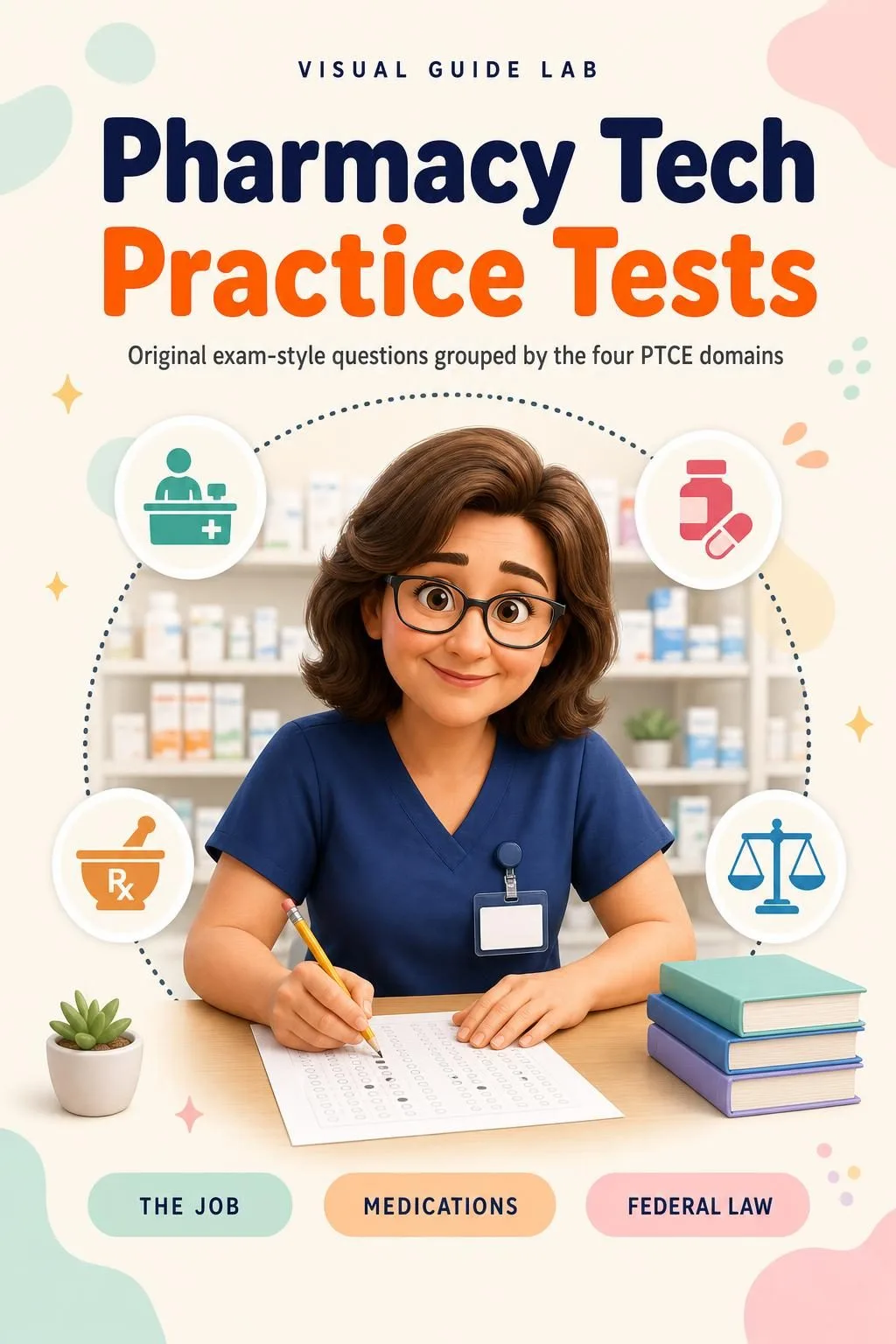
Pharmacy Tech Practice Tests

BONUS 1: «Pharmacy Tech Practice Tests»

Value on its own: US$ 17.90

Original exam-style questions grouped by the four PTCE domains: Medications, Federal Requirements, Patient Safety and Quality Assurance, Order Entry and Processing. Plus a timed mock exam, with every answer explained, so you know why it is right and what to reread when you miss one. Written for this material, not official exam questions.

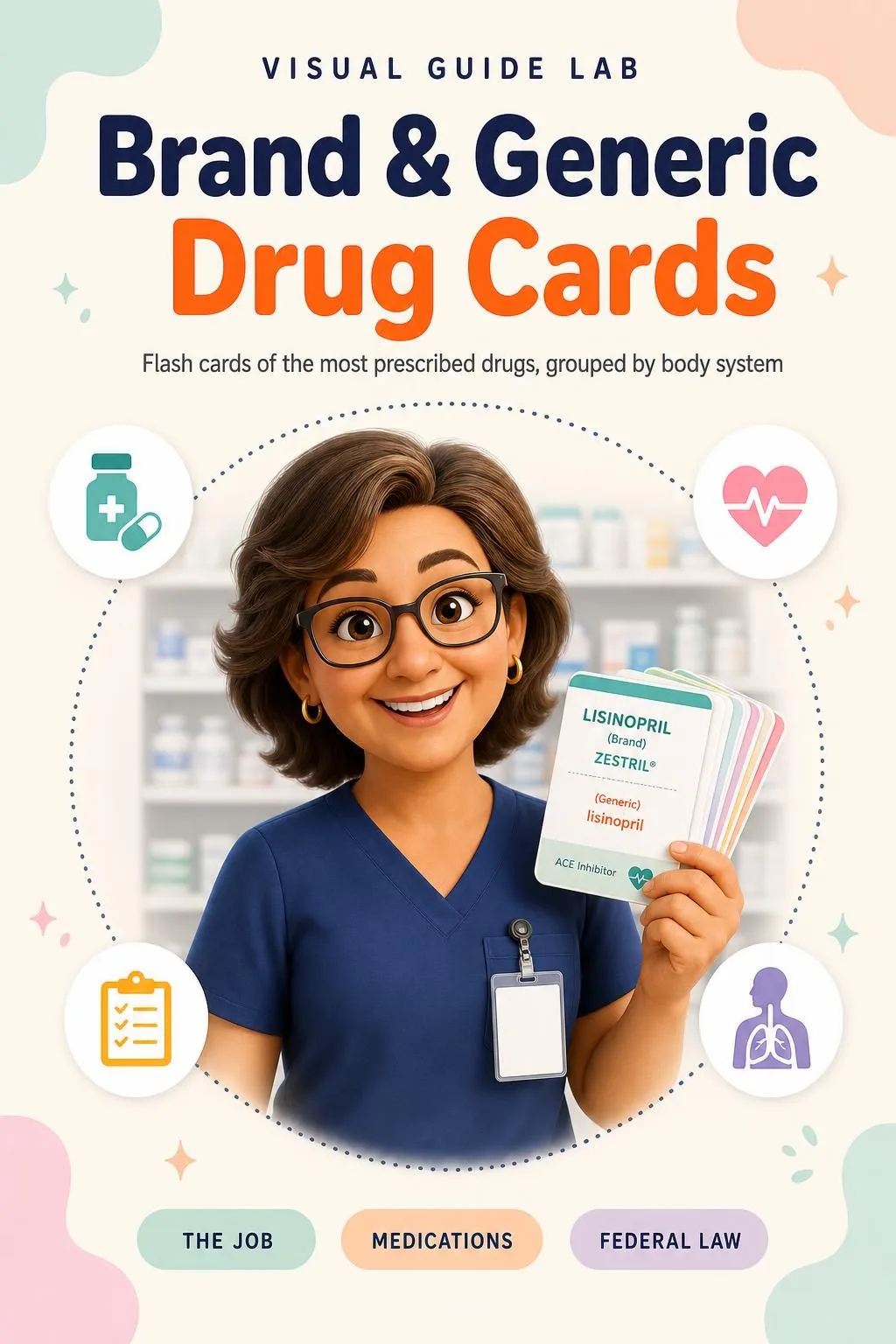
Brand & Generic Drug Cards

BONUS 2: «Brand & Generic Drug Cards»

Value on its own: US$ 14.90

Flash cards of the most prescribed drugs, grouped by body system: brand name, generic name, class and main use on every card, with self-tests to check what you remember. Made to print and carry with you.

Pharmacy Technician Made Visual + 2 Free Books

  • Pharmacy Technician Made Visual: 77 illustrated pagesUS$ 63
  • BONUS 1: Pharmacy Tech Practice TestsUS$ 17.90
  • BONUS 2: Brand & Generic Drug CardsUS$ 14.90
  • High-resolution PDF to printIncluded
Total value US$ 95.80
YOUR PRICE:
US$ 27
You save US$ 68.80
YES, I WANT PHARMACY TECHNICIAN MADE VISUAL FOR US$ 27

📄 This is a digital PDF book sent to your email: nothing is printed or shipped.

Secure purchaseEncrypted payment30-day guarantee

PDF by email: Pharmacy Technician Made Visual reaches your inbox as a PDF, and the two free books come by email too. One-time payment, no installments or hidden costs.

Is This Book for You?

You're in a pharmacy tech program

You're in a pharmacy tech program

The drug classes, the law and the math, one topic per page, to review between classes or after your shift.

Your PTCE or ExCPT is coming up

Your PTCE or ExCPT is coming up

A visual review built around the four PTCE domains (medications, federal law, patient safety, order entry and processing), the same areas the ExCPT tests, plus the pharmacy math. At the end, 20 practice questions with every answer explained.

You already work in a pharmacy

You already work in a pharmacy

A quick refresher on what you handle every shift: schedules, DAW codes, NDCs and days' supply, ready to print and keep handy.

To Sum Up: Here Is What You Get

US$ 95.80US$ 27
YES, I WANT PHARMACY TECHNICIAN MADE VISUAL FOR US$ 27

📄 This is a digital PDF book sent to your email: nothing is printed or shipped.

30DAYS
GUARANTEE

30-Day Guarantee

30-day guarantee: tell us what didn't work and we'll refund 100%.

You have 30 days to try Pharmacy Technician Made Visual and the two free books. If a file doesn't open, if the content isn't what this page describes, if you were charged twice or the download never arrived, write to us and we'll refund you in full. One payment, no subscription, no surprises.

Frequently Asked Questions

How do I get the material?

After your purchase you get an email with Pharmacy Technician Made Visual as a high-resolution PDF, to read on your phone or print. The two bonus books, Pharmacy Tech Practice Tests and Brand & Generic Drug Cards, also come by email.

Is it a monthly payment or a one-time payment?

A one-time payment of $27. No installments and no subscription.

Who is it for?

For pharmacy technician students, for career changers, for anyone preparing for the PTCE or the ExCPT, and for techs already working in a retail, hospital or mail-order pharmacy who want a visual review. You don't need pharmacy experience: Part I starts with what a technician does and doesn't do. Check the table of contents above to see every topic.

What sources is it based on?

PTCB's PTCE Content Outline (effective January 6, 2026) and NHA's ExCPT exam information. The content is checked against the Controlled Substances Act and DEA regulations (21 CFR Part 1300), FDA references (Orange Book, NDC Directory, REMS, recalls, DSCSA), USP <795>, <797> and <800>, ISMP lists and The Joint Commission's “Do Not Use” list. Where state law is stricter, the page says so.

Does it follow the current PTCE content outline?

Yes. The PTCE content outline in effect since January 6, 2026 has four domains: Medications (35%), Patient Safety and Quality Assurance (23.75%), Order Entry and Processing (22.5%) and Federal Requirements (18.75%), and the book has a part for each. The current outline no longer has nonsterile compounding, alligation or narrow therapeutic index drugs as their own areas: the book keeps one page on each because they are everyday pharmacy work. The official content outline always comes first.

Is this official PTCB or NHA material?

No. It's independent study material, not affiliated with or endorsed by PTCB, NHA or any state board of pharmacy. It doesn't give you a certificate, CE credit or exam eligibility: those come from your training program and from PTCB or NHA.

Does it replace my training program?

No. It's a study aid. It doesn't replace your training program, your externship, your pharmacy's procedures or the pharmacist, and it isn't medical advice. The math is solved as exam practice, not as dosing for a real patient.

Are the practice questions the real exam questions?

No. They're original questions written for this book, in the style of the exam, to help you practice. They are not official questions from the PTCE, the ExCPT or any other exam.

I already have a review book and a question app. What does this add?

Your review book explains it in text and your app asks you questions. This shows you each topic on one page: the drawing, the rule in a box and the numbers to know, always in the same layout. Use it to understand the topic first, then go back to your questions. It's a high-resolution PDF you can print and keep handy.

Can I print it?

Yes, as many times as you want, for yourself. The drug cards are made to be printed.

What if I don't like it?

You have 30 days: if a file doesn't open, if the content isn't what this page describes, if you were charged twice or the download never arrived, write to us and we'll refund you in full.
One Last Thing Before You Decide...

You don't have to reread the same page hoping this time it sticks.

You don't have to memorize drug names you can't picture.

And you definitely don't have to walk into the exam not knowing where to start.

There's an easier way. And it's one click away. Now it's your turn.

One-time payment: US$ 27 · Guarantee: 30 days · PDF by email

YES, I WANT PHARMACY TECHNICIAN MADE VISUAL FOR US$ 27

📄 This is a digital PDF book sent to your email: nothing is printed or shipped.